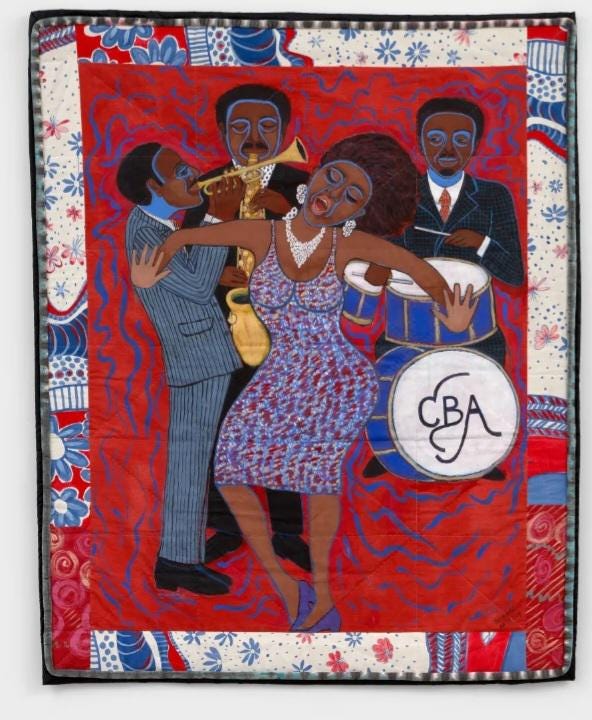
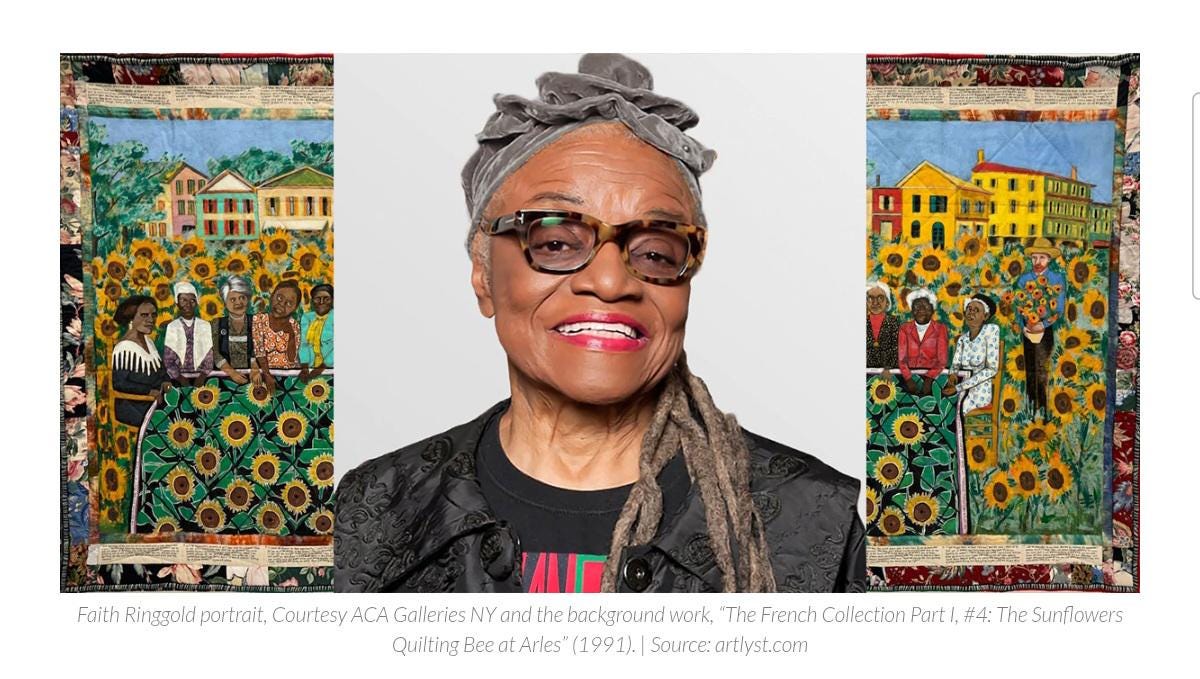
Faith Ringgold (1930–2024) redefined American art in the 1980s by pioneering "story quilts," which merged painted narratives with traditional quilt-making to capture the Black experience with both epic gravity and quiet dignity. These works, which she considered "paintings" made in the medium of quilting, served as a powerful medium for social commentary, exploring themes of African American identity, cultural heritage, and resilience.
Key Aspects of Ringgold's "Superrealism" and Story Quilts:
- Blending Art and Craft: Inspired by Tibetan thangkas (paintings on silk with brocade borders) and traditional African American quilt-making, Ringgold combined acrylic painting on canvas with patchwork fabric borders to create a unique, often autobiographical, narrative form.
- The "Epic" Narrative: Her quilts often feature autobiographical, fictional, or historical narratives, transforming personal memories and community stories into grand, sweeping, epic-like tales.
- Themes of Black Life & Resilience: Her work addresses the complexity of Black life in America, from the joyous, imaginative world of a child in Tar Beach (1988), where the protagonist flies over the George Washington Bridge, to the painful histories of slavery and racial injustice.
- Social Commentary: Ringgold used her art to subvert stereotypes and address inequalities, such as in Who's Afraid of Aunt Jemima? (1983), which reimagine the character as a successful businesswoman.
- "Quiet Dignity": Her "superrealism" captures her subjects with a sense of strength and grace rather than just anger or protest, aiming to evoke empathy.
READ : https://www.artdex.com/stitching-stories-faith-ringgolds-quilts-and-art-of-activism/#:~:text=Ringgold%20believed%20in%20both%20feminism,the%20rest%20of%20her%20life.